

 Amber McZeal is a Ph.D. graduate from the Community, Liberation, Indigenous, and Ecological depth psychology program at Pacifica, as well as being the founder of the . I am delighted to be speaking with her today.
Angela: You reference ā€œAfro-Indigenous spiritual technologiesā€ as being part of what you use in your work. Iā€™ve never seen the term ā€œspiritual technologiesā€ before. What do you mean by that and what would be an example of its use in practice?
Amber: Dr. Mary Watkins, who recently retired as Co-Chair in the CLIE program, went to dinner with me at the beginning of my dissertation and she asked me why I was using the word ā€œtechnology.ā€ I had to look up the etymology of the word. A technology is a treatise on an art form, coupled with spirituality, itā€™s the treatise on spiritual meaning, practice, and navigation. Iā€™ve read it before. Itā€™s mainly in spiritual circles. Spiritual technology is adjacent to depth psychology because itā€™s an approach to tending the inner world and meaning making thatā€™s rooted in that inner world, not just African, but most indigenous cultures. My dissertation focused on ancestor reverence as a site of knowledge production, and thatā€™s an expression of spiritual technology. When I sat with my ancestors who lived in Louisiana in the 1800s and offered ritual or prayer or artwork, when I opened up myself to taking seriously the dreams they would bring me as a form of communication, thatā€™s what depth psychology is all about, taking that seriously and weaving into your everyday experience. In that regard, Jung and I are like twins, dare I say?
I was fortunate to find a network called Ancestral Medicine Network, and I now offer ancestor healing sessions to different clients. Itā€™s part of what I do, help people cultivate their own intuitive knowledge and connection with their ancestors. There is an inner hearing of things that I would relate more to my body, which is my altar to my ancestors (I have a body because they existed), I call it reading my own cells, there will be words or narratives or scenes that come in my drop-in embodied space. Taking the time to tend those narratives and trying not to push them away as insignificant, thatā€™s the depth psychological approach, as well as much as the other indigenous approach. Dreams are like a telephone from your ancestors to you. The elements are part of the ancestral kinship network. Dr. Daniel Foor founded the network and heā€™s also a depth psychologist who graduated from Pacifica. I stumbled upon him, and that was the missing core for my dissertation. What attracted me was that it was structured, safe, and built on three pillars: Not all the dead are equally well; we affect the dead and the dead affect us; and lastly, the dead can change. The strategy is to bypass the troubles of the recent dead, who are harboring immense cultural pain that has not been ritualized and so they are not necessarily the most loving advocate to plug into, but thereā€™s something behind them, connecting with ones much older is the goal of this ancestor lineage healing approach. Colonializing is 500, 600 years old, but go back longer than that, to a few thousand years ago. The primordial waters are the ancestors of all of us and are much older than us. The trees are the ancient ones, the mineral bodies that weā€™re mining and pulling up are much older than us.
Angela: For current or potential students who are wondering how they will use their degree in a professional sense after graduating, I think that your forging your own organization and path to educate about a topic you are passionate about is very courageous and inspiring. Tell us a little about your work, how it endured during Covid, and what you most enjoy about teaching these workshops?
Amber: Thank you for your kind words. I didnā€™t know how meaningful it would be to be seen. It does take courage, and ā€œkissing the fearā€ was the first step in finding the courage. Dr. Joseph Cambray said in 2013 in his introduction to depth psychology, ā€œThe field of psychology is dead, and itā€™s dead because it was invented by Victorian Era white men, and they couldnā€™t possibly know everything to know about the soul. Your charge is to find new language. In order to break something, you have to know it very well.ā€ That has rang in my consciousness when I took a risk and decided to teach on my own. So taking the opportunity to reflect on what is broken and why the trauma persists, knowing that very well has supported me in taking risks and finding the courage to create something new. We do need more change agents, and transformative catalysts in the world. Those who utilize global networks to curate their own sites of knowledge-production; those who curate art, who use the technology we have in service to creating a more just and humane world. We find ourselves at this crossroads that says, ā€œAfter the stronghold on knowledge that weā€™ve been suffering under the last millennia, thereā€™s a crescent moon of a doorway to walk through, and if we donā€™t submit to those narratives of fear, we can walk through it.ā€
Angela: If there was one teachable point you most hope to get through to the public, what would that be?
Amber: One teachable aspect of this emerged in my dissertation work. The focus of that was racial disparities in maternal healthcare. On the surface, that is read as there being something about these particular bodies that maintains this symptom of early maternal death, but this ā€œracial groupā€ is not the root cause, unlike the approach of coloniality. I moved to ā€œracismā€ being the root cause. It is the structures of inequity and othering and the kind of stress that this produces that then yields the disparities in the health outcomes, it is not something unique to that particular body that caused those symptoms. That critical lens of how this was created in order to move into the depth of this cultural trauma, and from this depth place is where it can be transformed. So the battle weā€™re having in Florida, where Ron Desantis is trying to remove the A.P. African American course, is trying prohibit a critical consciousness, because if we understand how the ā€œotherā€ was created, then we might get out of the habit of othering others. And that is a fear, because othering is profitable. Toni Morrison has a book of essays she wrote a few years ago about this. Exploitative capitalism comes from the othering, creating that other in order to scapegoat them and sustain the exploitive profit.
The intersection from a depth psychological perspective is the collective consciousness, where the cultural trauma lives; race and the hierarchy of some people being ā€œbetterā€ than others is a cultural trauma, a dysregulation over the entire cultural bodyā€™s nervous system. It lives within the collective, and within the individual body, that unmetabolized cultural trauma becomes personality, so there are a lot of ways to work with this.
Angela: Thank you so much for your time today in speaking with me and the best of luck in your work.
Interested in Pacificaā€™s CLIE program? Visit us here.

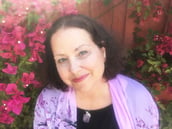
Amber McZeal. Writer, vocalist, sacred scholar, and artivist, Amber utilizes sound therapy and guided somatic imagery to engage the knowledge of the body within an interactive and liberatory arts practice. In 2018, Amber launched her organization, Decolonizing the Psyche, where she weaves somatic praxis with Afro-Indigenous spiritual technologies and social justiceā€”deep decolonialityā€”in efforts to end oppression and create more humane social relationships. Amber holds an M. A. in Somatic depth psychology and Ph. D. in Community, Liberation, Indigenous, and Ecological depth psychology.
Angela BordaĀ is a writer for °µĶų³Ō¹Ļ, as well as the editor of theĀ Santa Barbara Literary Journal.Ā Her work has been published inĀ Food & °µĶų³Ō¹Ļ, Peregrine, Hurricanes & Swan Songs, Delirium Corridor, Still Arts Quarterly, Danse Macabre,Ā and is forthcoming inĀ The Tertiary LodgerĢż²¹²Ō»åĢżRunning Wild Anthology of Stories, Vol. 5.
